Quick answer
Improve the listing in this order: positioning, cover image, photo journey, title, opening copy, practical detail, amenities, trust and mobile presentation. Then measure the result against a baseline.
A strong Airbnb listing does more than describe a property. It helps the right guest recognise that the stay suits them, understand exactly what they will receive and feel confident enough to book. That requires alignment between the property, photographs, title, copy, amenities, sleeping arrangements, rules, price presentation and the experience delivered after arrival.
The first goal is not to attract every traveller. It is to communicate the property’s strongest, most defensible reason to choose it and remove avoidable uncertainty. A clear listing can improve click-through and conversion; it cannot create demand that does not exist or compensate indefinitely for poor pricing, restrictive availability or weak operations.
A Listing Has Four Conversion Jobs
Every section should serve at least one of these jobs. Repetition, vague adjectives and decorative detail that does not help a decision can be removed.
1, Define the Guest and the Booking Reason
Before rewriting, decide who the property is best designed to serve. A listing positioned for everybody often feels relevant to nobody. The primary guest should reflect real demand, property suitability and manageable operations, not simply the owner’s preferred story.
Primary guest
Choose the strongest realistic segment: couples, families, groups, business travellers, relocations, event visitors, pet owners or another defined audience.
Decision advantage
Select one lead strength and two supporting reasons, such as location, privacy, space, view, pool, design, access or family readiness.
Connect each claim to something visible or verifiable: an image, measured distance, room feature, included service or accurate amenity.
Boundaries
State the characteristics that make the property unsuitable for some guests before they become disappointment or poor reviews.
2, Rebuild the First Five Photographs
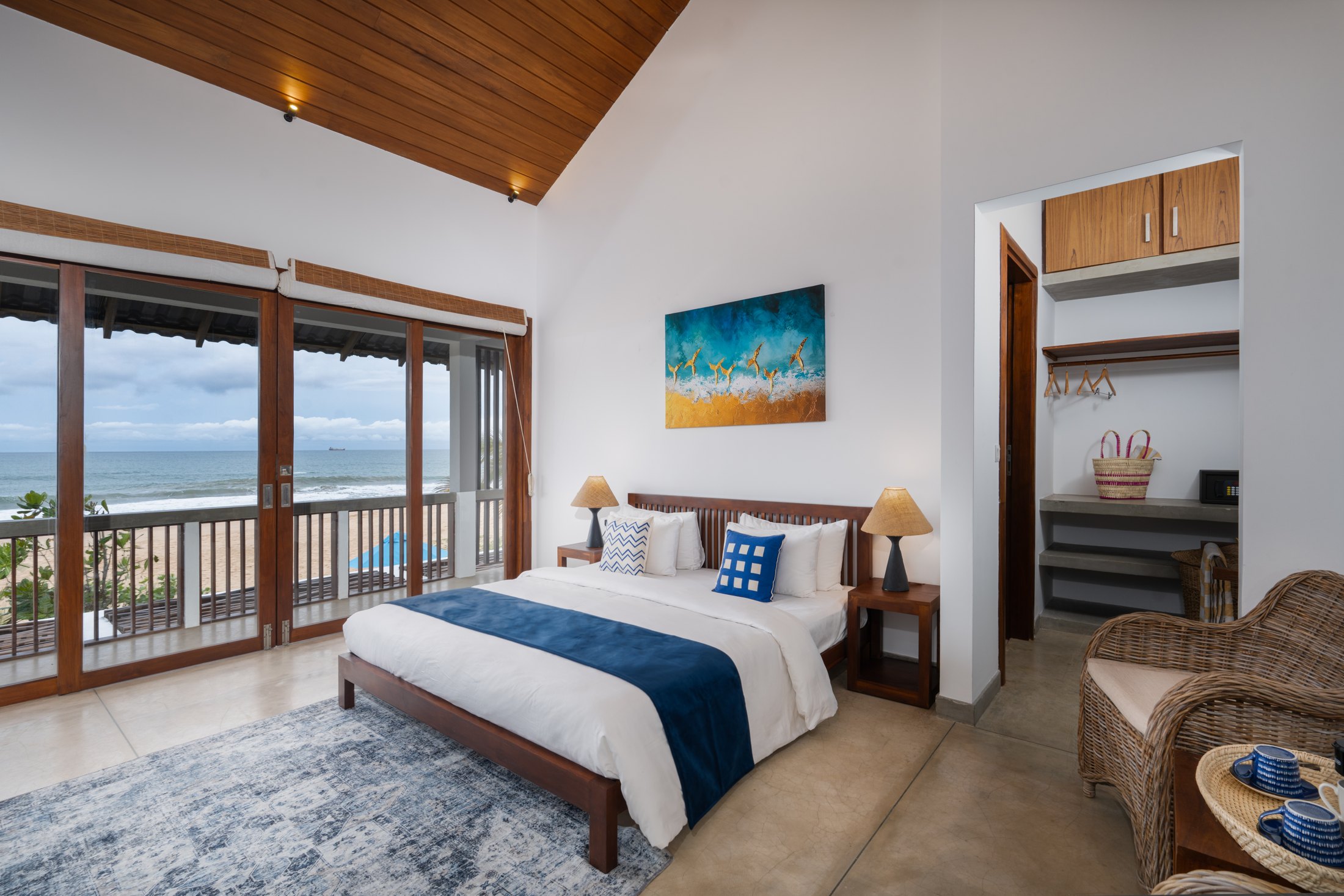
The first images carry disproportionate decision weight because guests often scan them before reading. Airbnb advises hosts to use high-quality, landscape-format photographs, natural light and a complete photo tour. The opening sequence should answer the guest’s largest questions, not merely display the owner’s favourite rooms.
Use current images that accurately represent condition and furnishings.
Show every guest-accessible room and important shared or excluded area.
Include wide, mid-range and detail views; avoid repetitive angles.
Use captions to explain practical value, not to repeat what the image visibly shows.
Photograph accessibility features according to Airbnb’s stated criteria.
3, Build a Complete, Honest Photo Journey
After the first five images, the sequence should simulate a clear walkthrough. Guests should understand arrival, entry, living spaces, kitchen, bedrooms, bathrooms, outdoor areas, parking, views and any shared facilities. Airbnb’s photo-tour tools can organise images by room, but the host remains responsible for checking order, accuracy and completeness.
Show relationships
Help guests understand whether bedrooms are on different floors, bathrooms are ensuite or shared, and outdoor areas connect safely.
Show scale honestly
Professional composition should clarify space, not create a misleading impression of room size.
Explain privacy
Identify private, shared, staff-only and inaccessible spaces.
Show the ordinary essentials
Parking, entrance, stairs, workspace, laundry and bathrooms may matter more to booking confidence than decorative close-ups.
Disclose material limitations
Road noise, steep access, unfenced water, low ceilings or another important constraint should not be hidden.
Refresh after change
Replace images when furniture, amenities, landscaping, access or condition materially changes.
4, Write a Title That Carries Decision Value
A title has limited space and should communicate one or two useful reasons to choose the property. Airbnb allows titles to be updated and requires them to comply with its content policy, including avoiding misleading information and symbols or emojis.
Lead with a defensible differentiator.
Use natural words a guest can understand immediately.
Review the title when the property, demand segment or competitive set changes.
5, Make the Opening Description Work Harder
The opening should quickly confirm the guest, property, strongest benefits and stay experience. It is not the place for a long welcome, the owner’s history or a list of every nearby attraction. Those details can follow after the booking proposition is clear.
Use specific facts rather than adjective-heavy claims. “A 12-metre private pool beside the garden” is more useful than “an incredible outdoor oasis.”
6, Explain Sleeping, Bathrooms and Access Precisely
Capacity alone does not tell a group whether the property works. Guests need to know how many people can sleep privately and comfortably, which beds are permanent, where extra beds are placed and whether bathrooms, entrances or facilities are shared.
Bedrooms
Name bed type, room location, privacy, air-conditioning or heating and any access constraints.
Additional guests
Explain sofa beds, rollaways, trundles or cots and the room in which they are used.
Bathrooms
State ensuite, shared and half-bath arrangements; do not let the bathroom count imply more privacy than exists.
Stairs and levels
Describe internal or external stairs, lift access and bedrooms located away from main living areas.
Parking and entry
State vehicle limits, height or access restrictions, street conditions and check-in method.
Shared or serviced spaces
Explain staff presence, shared pools, common entrances or owner accommodation clearly.
7, Complete Every Accurate Amenity
Amenities affect both guest filtering and booking confidence. Airbnb advises hosts to list everything genuinely provided and keep the selection current. Never tick an amenity because a similar substitute exists, and specify whether important facilities are private or shared.
8, Use Accuracy to Build Trust
A high-converting listing is not the one that removes every negative detail. It is the one that lets the right guest make a confident, informed choice. Airbnb advises that candid descriptions tend to work best and that overselling can lead to disappointment and negative reviews.
Use measured facts
Give realistic distances, dimensions and arrangements where they matter.
Separate property from neighbourhood
Clarify services
State whether cleaning, breakfast, chef service, transport or replenishment is included, optional or unavailable.
Update immediately
If an advertised amenity is removed, correct the listing and notify affected confirmed guests.
Align every field
Title, photos, captions, description, amenities, capacity, rules and location statements should not contradict one another.
9, Review Rules, Policies and Booking Friction
Guests may like the property but abandon the decision when house rules, check-in arrangements, cancellation terms or fees feel disproportionate. The answer is not to remove protections blindly; it is to make each restriction purposeful, clear and appropriate to the property and market.
Explain the reason for unusual rules where it improves understanding.
Check that quiet hours, visitor rules, pets, children and event limits match the positioning.
Review check-in windows, advance notice and identity or deposit requirements for avoidable friction.
Ensure the cleaning fee and other charges make sense at common stay lengths.
Place material conditions where guests will see them before booking, not only in a house manual.
10, Optimise for Mobile and the Actual Guest Journey
| Audit area | Pass condition | Priority evidence |
|---|---|---|
| Positioning | One clear guest proposition and defensible lead advantage | Market demand, property fit and competitor review |
| Search card | Cover and title communicate meaningful value | Small-screen comparison with genuine alternatives |
| Photography | Complete, current, accurate and logically ordered | Every guest-accessible space and material limitation shown |
| Copy | Specific, useful, easy to scan and free of contradictions | Sleeping, access, location and services understood quickly |
| Amenities | Every accurate feature selected and qualified | Live inventory, functionality and Airbnb definitions |
| Trust | Claims, photos, reviews, rules and delivery align | Recurring review themes and owner inspection |
| Conversion | Changes address a documented weakness | Baseline views, click-through, conversion and enquiry themes |
Owners often edit on a large screen while guests discover and compare properties on a phone. Preview the published page, not only the editing interface, and test the sequence from search result to booking decision.
Search card
Can the cover image and title communicate the central value at small size?
First screen
Do the first images and opening words confirm the property quickly?
Scanning
Are important facts easy to find without reading dense paragraphs?
Photo captions
Do they add useful information when a guest swipes without reading the main copy?
Map and location
Does the location presentation support the written claims?
Final decision
Are total price, rules, cancellation conditions and important limitations coherent with the promise?
Check the live page while signed out or from a guest view where practical. Confirm that recent edits have appeared and that no old image, amenity or statement remains elsewhere in the listing.
A 30-Day Improvement Process
1. Record the baseline
Capture live content, views, click-through, conversion, enquiries, booking pace, reviews and comparable presentation.
2. Define the proposition
Agree the primary guest, occasion, lead advantage and boundaries.
3. Correct accuracy
Fix amenities, access, sleeping, location, rules and outdated information immediately.
4. Rebuild the first impression
Replace or reorder the cover and first five photographs; rewrite the title.
5. Rewrite the decision content
Strengthen opening, layout, guest access and other-details sections.
6. Preview and proof
Review mobile presentation, captions, consistency and the complete guest journey.
7. Publish controlled changes
Record the date and the material changes made.
8. Measure and learn
Compare equivalent periods and avoid claiming success from one booking or a seasonal movement.
Frequently Asked Questions
What makes a good Airbnb listing?
A clear guest proposition, strong and accurate photographs, useful title, complete practical details, correct amenities, transparent limitations and consistency with the delivered stay.
Can better photos increase bookings?
They may improve attention and conversion when presentation is the weakness. They cannot create demand or fix poor value, availability, reviews or operations.
How many photos should an Airbnb listing have?
There is no universal ideal. Use enough current, non-repetitive images to show every relevant space, layout relationship, amenity and material limitation.
Should I use “luxury” in my title?
Only when the property and full guest experience credibly support it. Specific features and location value are usually more useful than generic status claims.
How often should I update my listing?
Review it whenever the property, amenities, rules, access or service changes, and conduct scheduled checks against guest questions, reviews and market presentation.
Why do I have views but no bookings?
Guests may be losing confidence over photographs, fit, sleeping arrangements, total price, rules, reviews, policies or an unclear proposition. Review the wider bookings-diagnosis article as well.
Can Bliss Spaces improve listings anywhere in Australia?
Yes. Listing review, content optimisation and central commercial support can be delivered Australia-wide, subject to scope.
Can you guarantee better ranking or more bookings?
No. Search visibility and bookings depend on multiple platform, market, property, pricing, availability, review and guest-response factors.
Airbnb Listing Review
Assess positioning, content, photographs, amenities, accuracy, guest fit and conversion friction.
Listing Management & Optimisation
Create or rebuild listing content, organise the visual journey and maintain listing accuracy.
Pricing & Revenue Management
Align date-level rates, restrictions and availability after the listing foundation is sound.
Combine the relevant commercial services under one coordinated pathway.
Connect listing performance with local housekeeping, maintenance and readiness for suitable Victorian properties.
Explore related pathways
Sources and Further Reading
- Airbnb, Help your listing stand out
- Airbnb, Taking great photos of your listing
- Airbnb, Refresh your listing
- Airbnb, Add amenities to a listing
- Airbnb, Edit your listing title
- Airbnb, Updating listing descriptions after a guest has booked
- Airbnb, Accessibility features photo criteria
- Airbnb, Help a host’s listing stand out